
Sleep trackers are everywhere: watches, rings, bedside devices, mattress sensors, even phone apps. They all claim to “track sleep,” but they don’t all do it the same way.
That’s where most of the confusion comes from. These devices don’t measure sleep directly. They infer it, using different signals and assumptions.
And whether a tracker is wearable or non-wearable fundamentally changes what data you get and how accurate certain metrics are.
Wearable Sleep Trackers vs Non Wearable Sleep Monitors Table of Contents
What Is a Wearable Sleep Tracker?
A wearable sleep tracker is a device you wear on your body overnight (usually on your wrist or finger) that estimates sleep by watching what your body does while you’re unconscious.
Its defining feature isn’t the shape or the brand. It’s proximity. These devices sit directly against your skin, giving them access to internal physiological signals that bedside gadgets simply can’t detect.
Most wearables fall into a few familiar categories:
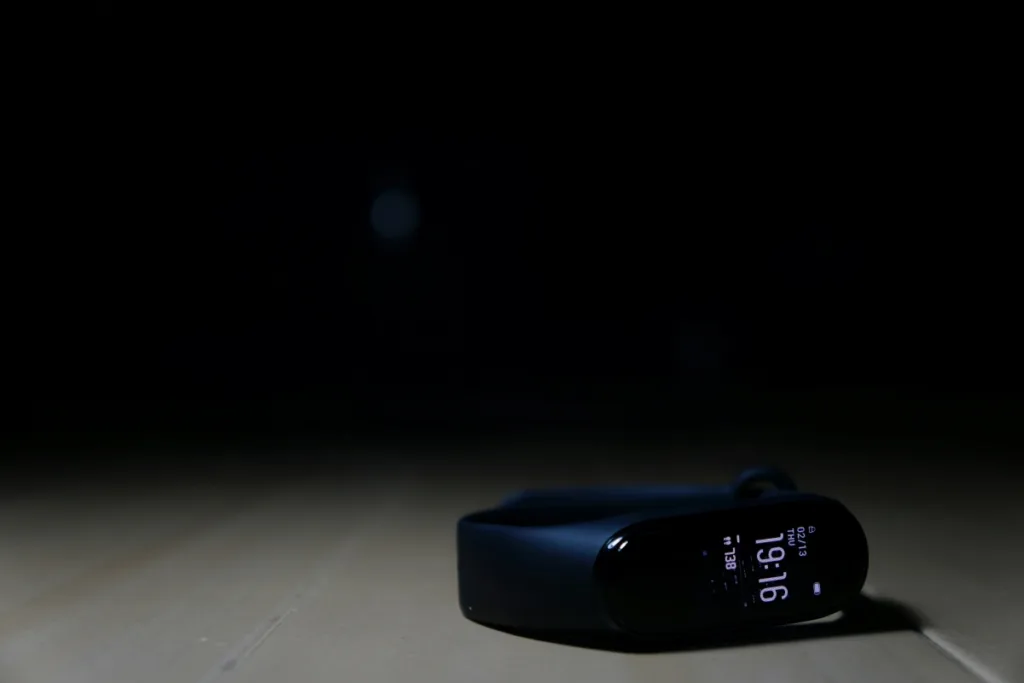
- Wrist-based devices like Apple smartwatches and fitness bands like Fitbit
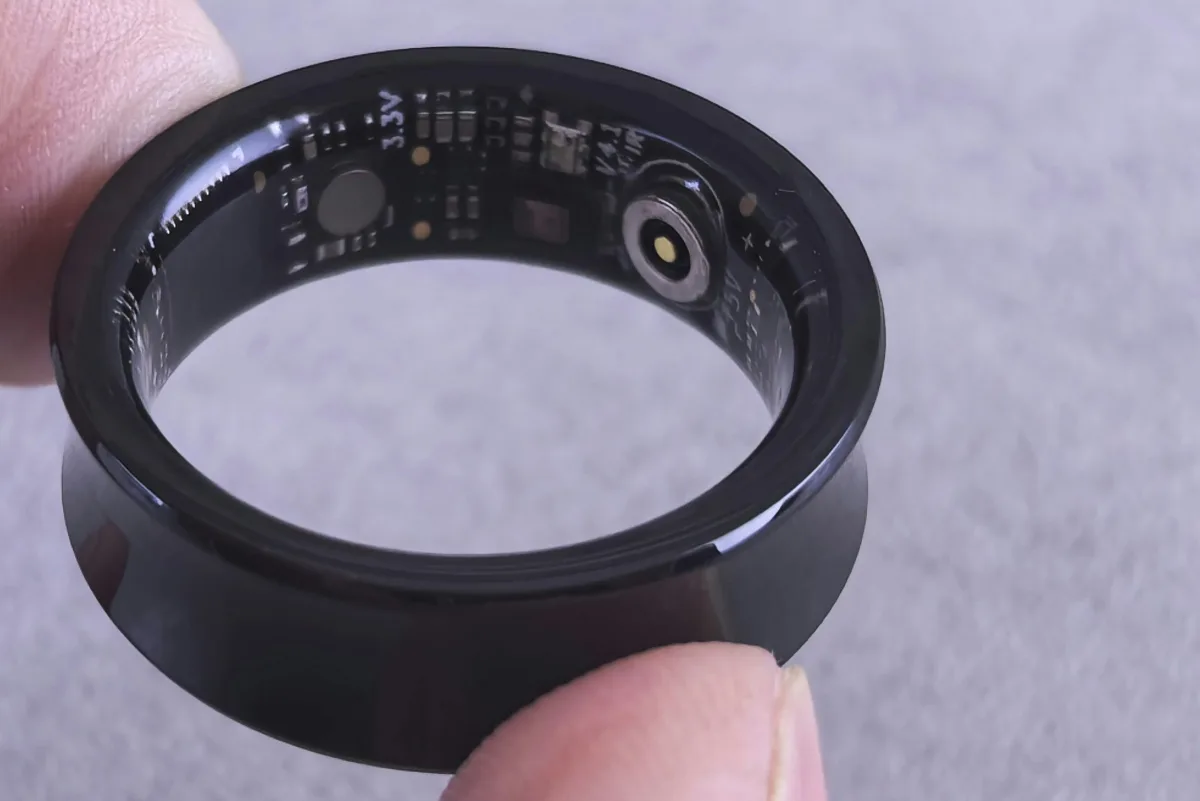
- Smart rings worn on the finger like Aura
- Headbands or forehead sensors, which are rarer and a bit more niche
Because wearables maintain constant contact with your body, they can track movement alongside cardiovascular and autonomic signals. That usually includes heart rate, heart-rate variability (HRV), skin temperature trends, and sometimes blood oxygen levels.
None of these signals is “sleep” in the literal sense, but they do change in very predictable ways once your nervous system powers down.
This is where the magic – and the misunderstanding – happens.
Wearables don’t know when you’re dreaming. They don’t see brain waves. What they do is recognize patterns: prolonged stillness, a drop in heart rate, shifts in variability that suggest parasympathetic dominance.
From there, algorithms make educated guesses about sleep timing and stages.
That’s the important bit: educated guesses. Not declarations.
Over a single night, those estimates can be a little wobbly. Over weeks, trends emerge. That’s where wearables earn their keep.

What Is a Non-Wearable (Nearable) Sleep Monitor?
A non-wearable sleep monitor, often called a nearable, tracks sleep without touching your body at all.
Instead of sitting on your wrist or finger, it lives on or near the bed and observes what happens while you sleep from a respectful distance.
Think less “wearable gadget,” more “quiet lab assistant taking notes in the corner.”
These devices estimate sleep by tracking external signals associated with sleeping behavior rather than internal physiology.
Common Types of Non-Wearable Sleep Monitors
Most non-wearable systems fall into a few broad categories:
- Under-mattress sensors that detect movement and breathing through the bed
- Bedside devices using radar, motion, or sound
- Phone-based trackers placed on a nightstand or nearby surface
Despite looking simpler, many of these devices rely on fairly sophisticated sensing technology. They just apply it from the outside.
What Non-Wearable Sleep Monitors Measure
Because they don’t have direct contact with your body, nearables focus on signals that travel well through space or surfaces, such as:
- Body movement and restlessness
- Breathing rate and rhythm
- Snoring or other sleep sounds
- Environmental factors like room temperature or noise
From these signals, algorithms estimate when you fall asleep, how often you move or wake, and how stable your breathing appears overnight.
Some systems also infer sleep stages, though these estimates are typically based more heavily on movement patterns than physiology.
How Wearable and Non-Wearable Sleep Trackers Actually Detect Sleep
This is the part most sleep trackers quietly skate past. Sleep detection sounds precise, but in consumer tech, it’s mostly an exercise in very good guesswork.
Clever guesswork, but still guesswork.
At the foundation of almost all sleep tracking is actigraphy, which is a fancy word for analyzing movement over time.
The assumption is simple: when you’re very still for long enough, you’re probably asleep. When you move a lot, you’re probably awake. Everything else is refinement.
How Wearable Trackers Infer Sleep
Wearables start with movement, then layer on internal physiological signals to improve the estimate. In practice, that means they look for combinations like:
- Prolonged stillness paired with a drop in heart rate
- Shifts in heart-rate variability that suggest nervous-system downregulation
- Slower, more regular breathing inferred from cardiovascular patterns
When these signals line up, the algorithm becomes more confident that you’re asleep and may attempt to classify what kind of sleep you’re in.
The important thing to remember is that sleep stages aren’t being observed directly. They’re being inferred based on probability models trained on large datasets.
How Non-Wearable Trackers Infer Sleep
Non-wearables play a different game. Without access to internal physiology, they focus on what can be detected externally:
- Movement transmitted through the mattress or bed frame
- Breathing motion and rhythm
- Changes in restlessness or position
- Sound patterns like snoring or brief awakenings
These systems are often very good at detecting when you’re asleep versus awake, especially over long time spans.
Sleep stage detection, when offered, is usually based more heavily on movement patterns and breathing regularity than nervous-system signals.
Accuracy: Are Wearable or Non-Wearable Sleep Trackers More Reliable?
“Accuracy” is the most overworked word when it comes to sleep tracker technology, and also the least helpful if it’s not handled carefully.
In clinical settings, sleep is measured using polysomnography — brain waves, muscle activity, eye movements; the whole wired-up situation.
Consumer trackers are not doing that, and they’re not pretending to. They’re solving a different problem. So the better question isn’t which is more accurate? It’s accurate at what?
Where Wearable Sleep Trackers Tend to Perform Better
Because wearables track internal physiological signals, they’re often stronger at:
- Identifying sleep and wake trends across time
- Detecting changes in recovery or autonomic load
- Linking sleep patterns to daytime stress or training demands
Heart-based metrics don’t tell you everything about sleep, but they do provide context that movement alone can’t.
Over weeks or months, that context can reveal meaningful shifts, even if nightly sleep-stage estimates bounce around a bit.
Where Non-Wearable Sleep Monitors Tend to Perform Better
Non-wearables biggest strength is consistency. With nothing to wear, charge, or remember, they’re more likely to collect uninterrupted data night after night.
That consistency makes them particularly good at:
- Tracking sleep timing and regularity
- Identifying restlessness or frequent awakenings
- Spotting long-term patterns without user fatigue
A slightly less detailed signal captured reliably can outperform a richer signal that’s missing half the nights.
Which Sleep Tracking Approach Is Better for Your Goals?
Once you strip away the marketing language, choosing the best sleep tracker becomes less about features and more about fit.
If Your Goal Is General Sleep Awareness
If you mostly want to understand when you’re sleeping, how consistent your schedule is, and whether your nights are generally calm or chaotic, either approach can work.
What matters more than device type is whether the feedback nudges you toward better habits or quietly fades into the background.
For many people, non-wearable trackers win here simply because they ask for so little. They observe, you sleep, and everyone minds their business.
If You Care About Recovery, Stress, or Readiness
If sleep is part of a bigger picture (training, burnout management, energy regulation), wearables tend to offer more context. Heart-rate variability and overnight cardiovascular patterns can add texture to sleep data, helping you see how yesterday’s demands show up overnight.
That extra context is useful, but only if you actually want to look at it. Some people love dashboards. Others feel personally attacked by them before coffee.
If You’re Sensitive to Sensory Input at Night
For light sleepers or people who simply don’t like wearing things to bed, even a small ring or band can become a nightly distraction.
In those cases, non-wearable trackers often outperform wearables by staying out of the way. Sleep quality improves, data improves, and everyone wins.
Limitations of Both Wearable and Non-Wearable Sleep Trackers
No matter how advanced they look, consumer sleep trackers all share a few hard limits.
They Can’t Diagnose Sleep Disorders
Wearable or non-wearable, these devices are not medical tools. They can’t diagnose insomnia, sleep apnea, narcolepsy, or anything else with a name and a billing code.
At best, they can flag patterns that suggest something might be off, which is a cue to talk to a professional — not to self-diagnose at 7 a.m. in your pyjamas.
Algorithms Change, Even If Your Sleep Doesn’t
Sleep-tracking algorithms are updated regularly. Sometimes that’s a good thing. Sometimes it means your sleep score drops overnight for no obvious reason.
When that happens, it’s usually the math changing, not your biology. This is another reason trends matter more than single nights.
The Environment Still Gets a Vote
Partners, pets, mattress type, room temperature, noise, and even bed frames can interfere with readings, especially for non-wearable devices.
Wearables aren’t immune either; loose fits, poor skin contact, or movement-heavy sleepers can confuse sensors. Sleep doesn’t happen in a vacuum, and neither does sleep data.
Sleep Stages Are Easy to Overinterpret
This one deserves special attention. Sleep stages from consumer trackers are estimates, not direct measurements of brain activity.
Treating them as precise truths can lead to unnecessary anxiety, perfectionism, or a sense that you “failed” at sleeping.
If your tracker says you slept terribly, but you feel fine, trust the organism. It’s been doing this longer than the algorithm.
Frequently Asked Questions
Are wearable sleep trackers more accurate than non-wearable sleep monitors?
Most of the time, but not always. Wearable sleep trackers tend to be better at capturing internal physiological trends, like heart rate–related recovery signals, while non-wearable sleep monitors often excel at consistent, long-term tracking because they’re easier to use every night.
Do sleep trackers actually measure sleep stages?
No. Consumer sleep trackers do not measure sleep stages directly. They estimate them using movement, heart-related signals, and breathing patterns. The results can be useful over time, but they’re best treated as approximations, not clinical truths.
Can sleep trackers diagnose sleep disorders?
No. Wearable and non-wearable sleep trackers are not diagnostic tools. They can highlight unusual patterns, but diagnosing conditions such as sleep apnea or insomnia requires medical evaluation.
Conclusion
Wearables trade comfort for depth. They offer internal physiological insight, richer context, and tighter links between sleep and daytime stress or recovery.
Non-wearables trade detail for ease. They fade into the background, collect data passively, and reward consistency over complexity, even if the biological picture is less granular.
Both can support better sleep awareness when expectations are realistic. Neither fixes sleep. They reflect patterns, not performance.
Sleep improves through behavior and nervous-system regulation. And that starts with understanding what’s stressing you out and what’s messing with your sleep.
If you need some help, we created a few science-backed assessments to help you see the big picture. They’re quick and free. So, do a sleep hygiene test and stress assessment to see what your biggest sleep disruptors are.
