
Sleep trackers in 2026 are having a bit of an identity crisis – and that’s a good thing.
A few years ago, the goal was simple: count sleep stages, slap a score on it, and call it insight. Now, most serious sleep tracking devices have quietly moved on. Instead of obsessing over whether you got 1 hour and 23 minutes of REM, they’re asking better questions.
How recovered are you? How stressed is your nervous system? Is your sleep actually supporting your life or just happening while you’re exhausted?
We’re here to go over the best sleep trackers of 2026, across wearables, smart rings, non-wearable monitors, and emerging tech. We’ll be honest about what each device does well, where it falls apart, and who it’s actually for.
If you already know sleep tracking can be useful and you’re trying to choose the right tool, this is for you.
Best Sleep Trackers 2026 Table of Contents
Best Sleep Trackers of 2026 (Quick Comparison)
If you wanna skip the good stuff, here’s a quick overview of the top options
| Device | Type | Best For | Key Strengths | Major Limitation |
| Oura Ring 4 | Smart ring | Best overall sleep + recovery insight | Premium features behind a paywall | Subscription required for full insights |
| WHOOP 5.0 / MG | Screenless wearable | Recovery, stress, and performance tracking | Deep recovery metrics, long battery life, great for athletes | Ongoing membership, no smartwatch features |
| Samsung Galaxy Ring | Smart ring | Android users | Strong battery life, Galaxy Health integration, AI sleep insights | Limited iPhone support |
| Ultrahuman Ring Air | Smart ring | Subscription-free sleep tracking | Lightweight, no subscription, actionable insights | Shorter battery life than competitors |
| RingConn Gen 2 / Air | Smart ring | Battery life + simplicity | Very long battery, no subscription | Less analytical depth |
| Withings Sleep Analyzer | Non-wearable (under-mattress) | People who hate wearing devices | Contact-free, tracks breathing & snoring | Limited physiological detail (no HRV) |
| Amazfit Helio Strap | Screenless band | Budget-friendly tracking | Affordable, no subscription, comfortable | Basic insights only |
| Fitbit Charge 6 | Fitness band | Beginners | Easy to use, solid sleep basics, good battery | Premium features behind paywall |
| Xiaomi Smart Band 9 | Budget band | Ultra-budget users | Very affordable, long battery life | Minimal sleep interpretation |
| Kokoon Nightbuds | Sleep earbuds | Relaxation + light tracking | Combines audio + sleep sensing | Niche use case, limited metrics |
Best Overall Sleep Tracker for 2026
Oura Ring 4
Best for: People who want deep sleep and recovery insight without a bulky wearable
Type: Smart ring
Oura Ring 4 offers the most balanced sleep tracking experience in 2026, combining strong overnight signal quality with thoughtful interpretation. It focuses on trends, recovery, and readiness rather than pushing nightly perfection.
Key specs
- Battery life: Up to ~7–8 days, depending on usage and ring size
- Sensors: Optical heart rate sensor, HRV, skin temperature sensor, SpO₂, accelerometer
- Sleep metrics: Sleep duration, sleep stages, sleep latency, efficiency, respiratory rate
- Sampling: Continuous overnight heart rate and HRV tracking
- Compatibility: iOS and Android via the Oura app
- Water resistance: Up to 100 m (safe for swimming and daily wear)
- Weight: ~4–6 g depending on size
What it does well
- Excellent overnight heart rate and HRV signal quality thanks to finger placement
- Strong trend analysis that adapts to your personal baseline over time
- Skin temperature tracking that helps flag illness, stress, or circadian disruption
- Comfortable for sleep, especially if you dislike watches or bands in bed
Where it falls short
- Requires a subscription for detailed insights and readiness scores
- No real-time or on-device feedback – everything happens in the app
- Less useful if you want immediate, night-by-night “performance” validation
Bottom line
If you want a sleep tracker that quietly collects high-quality data and helps you understand long-term recovery without turning bedtime into a test, Oura Ring 4 is still the most balanced option in 2026.
Best Smart Ring Alternatives
Samsung Galaxy Ring
Best for: Android users who want discreet sleep and health tracking without wearing a watch
Type: Smart ring
Samsung Galaxy Ring is designed to disappear on your hand while quietly feeding data into Samsung Health. It prioritises comfort, battery life, and ecosystem integration over deep performance analytics, making it a sleep-first ring rather than a recovery-heavy tool.
Key specs
- Battery life: Up to ~6–7 days, depending on ring size and usage
- Sensors: Optical heart rate sensor, SpO₂, skin temperature sensor, accelerometer
- Sleep metrics: Sleep duration, sleep stages, sleep score, movement, breathing-related insights
- Connectivity: Bluetooth Low Energy (BLE)
- Compatibility: Android (Samsung Health; best experience on Samsung phones)
- Water resistance: IP68 / 10 ATM (safe for swimming and showering)
- Weight: ~2.3–3.0 g depending on size
What it does well
- Extremely lightweight and comfortable for overnight wear
- Strong battery life for a ring, reducing charging friction
- Clear, easy-to-digest sleep summaries inside Samsung Health
- No subscription required — all features available after purchase
Where it falls short
- Limited or no iOS support
- Less depth in HRV-driven recovery insights than Oura or WHOOP
- Sleep interpretation can feel generic compared to more specialised platforms
Bottom line
If you’re on Android (especially within the Samsung ecosystem) and want low-friction, subscription-free sleep tracking, the Galaxy Ring is a solid option.
Ultrahuman Ring Air
Best for: People who want actionable sleep and recovery insights without subscription fees
Type: Smart ring
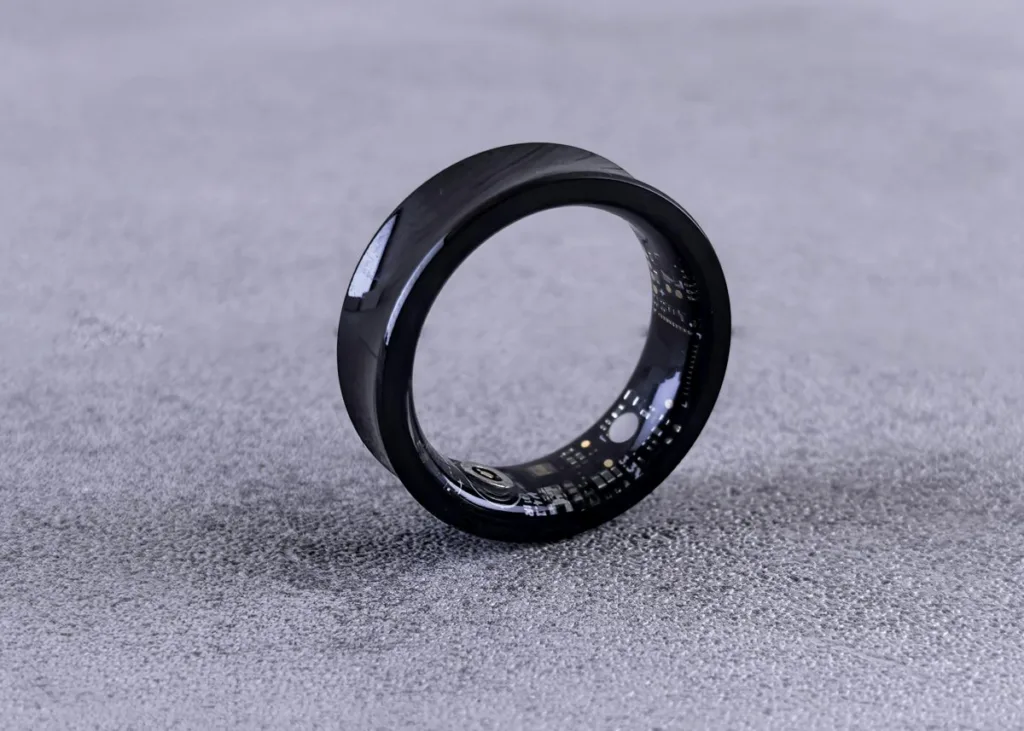
Ultrahuman Ring Air aims to give you nuanced insight without locking key features behind a paywall. It pairs core physiological tracking with contextual suggestions that lean slightly more practical and less performance-obsessed than some premium trackers.
Key specs
- Battery life: ~4–6 days, depending on usage patterns
- Sensors: Optical heart rate sensor, SpO₂, skin temperature sensor, accelerometer
- Sleep metrics: Sleep duration, sleep stages, HRV trends, respiratory rate
- Compatibility: iOS and Android via the Ultrahuman app
- Build: Lightweight titanium body with skin-friendly finish
- Water resistance: Splash and sweat resistant (IP certification varies by region)
What it does well
- Subscription-free core features (no mandatory recurring cost)
- Tracks key vitals relevant to sleep and recovery
- Comfortable, lightweight design suitable for overnight use
- Integration with the Ultrahuman app for lifestyle and recovery context
Where it falls short
- Battery life isn’t as long as rings with larger housings
- App analytics and trend depth aren’t as detailed as premium competitors
- Sleep staging accuracy can trail behind top-tier smart ring engines
Bottom line
If you want a subscription-free smart ring that gives useful sleep and recovery data without complexity, Ultrahuman Ring Air is one of the more approachable alternatives.
RingConn Gen 2 / Gen 2 Air
Best for: Users who want long battery life and simple sleep data without subscriptions
Type: Smart ring
RingConn’s Gen 2 series is about efficiency and longevity. It doesn’t chase feature hype — it focuses on reliable foundational metrics (sleep duration, HR, SpO₂, movement) and squeezes more uptime between charges than most competitors. That makes it a solid choice if consistency matters more than deep analytics.
Key specs
- Battery life: ~10–12 days per charge (one of the longest in smart rings)
- Sensors: Optical heart rate, SpO₂ (via PPG), accelerometer
- Sleep metrics: Sleep duration, basic sleep staging, oxygen trends
- Compatibility: iOS & Android (company app)
- Build: Stainless or ceramic ring with comfortable profile
- Water resistance: Varies by model (usually splash/sweat-resistant)
What it does well
- Very strong battery life — best in class for smart rings
- No subscription required for core data and trends
- Solid basics for sleep and oxygen tracking
- Good choice for people who just want the data without noise
Where it falls short
- Sleep staging is rudimentary compared to premium rings
- App analytics are functional but not deep — fewer coaching insights
- Lacks some advanced sensors (temperature, high-resolution HRV)
Bottom line
If you want a low-maintenance ring that stays charged longer than most and gives solid baseline sleep data without a subscription, RingConn Gen 2 is one of the most practical options of 2026.
Best Sleep Wearable for Recovery and Stress Tracking
WHOOP 5.0
Best for: People who want deep sleep, recovery, and stress insights backed by extensive physiological tracking
Type: Screenless wearable (biometric band)
WHOOP 5.0 treats sleep as part of a bigger recovery system rather than a standalone metric.
Instead of fixating on sleep stages, it focuses on how well your sleep supports physical and mental readiness, using continuous heart rate and heart rate variability (HRV) data to frame the bigger picture.
Key specs
- Battery life: Up to ~14+ days on a single charge (with wireless charging options)
- Sensors: Optical heart rate, HRV, SpO₂, skin temperature, respiratory rate, sleep stages support
- Compatibility: iOS & Android via the WHOOP app
Design: Lightweight, screenless band (≈28 g) - Water resistance: IP68, swim-friendly
What it does well
- Exceptional recovery and readiness scoring that connects sleep quality to stress and performance
- Long battery life that keeps overnight and long-haul tracking seamless
- Continuous monitoring with high-frequency sensors for consistent trends
- Great for athletes or people who want context, not just numbers
Where it falls short
- Requires a monthly/annual subscription for deeper insights and coaching plans
- No screen; all data is app-driven, which isn’t everyone’s preference
- Not ideal if you want obvious sleep scores or visual feedback on the device itself
Bottom line
If you want a wearable that treats sleep as part of a recovery ecosystem, with deep physiological context and strong long-term insight, WHOOP 5.0 is the best of its kind in 2026.
Best Budget-Friendly Sleep Trackers (2026 Edition)
Amazfit Helio Strap
Best for: People who want affordable sleep tracking without subscriptions
Type: Screenless wearable band
Amazfit Helio Strap strips things back to the essentials. It focuses on sleep duration, heart rate, and basic recovery signals without adding screens, notifications, or recurring fees. For the price, it does exactly what it promises — no more, no less.
Key specs
- Battery life: ~10 days per charge
- Sensors: Optical heart rate sensor, accelerometer
- Sleep metrics: Sleep duration, sleep stages, resting heart rate
- Compatibility: iOS & Android via the Zepp app
- Design: Lightweight, screenless band
- Water resistance: Swim- and shower-safe
What it does well
- No subscription required
- Comfortable and unobtrusive for overnight wear
- Reliable sleep duration and timing estimates
- Very low maintenance
Where it falls short
- Limited recovery or stress insight
- No advanced metrics like HRV trends or temperature
- App interpretation is basic
Bottom line
If you want affordable, no-frills sleep tracking that doesn’t demand attention or money every month, the Amazfit Helio Strap is one of the best budget picks.
Xiaomi Smart Band 9
Best for: Ultra-budget users who want long battery life
Type: Fitness band
Xiaomi’s Smart Band line continues to dominate the low-cost end of the market. The Smart Band 9 delivers basic sleep tracking alongside impressive battery life, making it a popular entry point for people who just want to start paying attention to their sleep.
Key specs
- Battery life: Up to ~14 days
- Sensors: Optical heart rate sensor, accelerometer
- Sleep metrics: Sleep duration, sleep stages, basic sleep score
- Compatibility: iOS & Android via Xiaomi’s app
- Display: Small AMOLED screen
- Water resistance: 5 ATM
What it does well
- Extremely affordable
- Long battery life reduces charging friction
- Simple sleep summaries that are easy to understand
Where it falls short
- Sleep insights are shallow and largely descriptive
- App experience can feel cluttered
- Limited personalization or trend analysis
Bottom line
If price is the deciding factor and expectations are realistic, Xiaomi Smart Band 9 delivers decent sleep basics for very little money.
Best Sleep Tracking Device for Beginners
Fitbit Charge 6
Best for: First-time sleep tracker users who want simplicity
Type: Fitness band
Fitbit Charge 6 remains one of the easiest ways to ease into sleep tracking. Its strength isn’t cutting-edge sensors — it’s clarity. Sleep summaries are readable, familiar, and non-intimidating, which makes them a good starting point for beginners.
Key specs
- Battery life: ~7 days
- Sensors: Optical heart rate, SpO₂, accelerometer
- Sleep metrics: Sleep duration, sleep stages, sleep score, breathing rate
- Compatibility: iOS & Android via the Fitbit app
- Display: Full-color touchscreen
- Water resistance: Swim-safe
What it does well
- Very beginner-friendly app and language
- Clear sleep scores and summaries
- Good balance of sleep + general health tracking
Where it falls short
- Deeper insights require Fitbit Premium
- Less recovery-focused than rings or WHOOP
- Battery life is shorter than that of minimalist bands
Bottom line
If you’re new to sleep tracking and want something familiar and easy to interpret, the Fitbit Charge 6 is still one of the least intimidating places to start.
Best Sleep Tracking Apps and Gadgets
Kokoon Nightbuds
Best for: People who want relaxation tools alongside light sleep tracking
Type: Sleep earbuds
Kokoon Nightbuds blend sleep-friendly audio with basic sleep sensing. They’re not a replacement for a dedicated tracker, but they’re useful if your biggest sleep issue is winding down, not data analysis.
Key specs
- Battery life: Designed for overnight use
- Sensors: Motion and in-ear sensors
- Sleep metrics: Sleep duration, sleep onset, wake time
- Features: Audio fading, sleep masking, guided relaxation
- Compatibility: iOS & Android via the Kokoon app
What it does well
- Combines relaxation tools with passive sleep tracking
- Comfortable for side sleepers compared to regular earbuds
- Useful for people sensitive to noise
Where it falls short
- Very limited physiological data
- Not suitable for recovery or trend analysis
- Niche use case
Bottom line
Kokoon Nightbuds make sense if audio support helps you sleep — but they’re a supplement, not a serious sleep analytics tool.
How We Evaluated the Best Sleep Trackers for 2026
There’s no such thing as a perfectly accurate sleep tracker technology. Anyone who tells you otherwise is either selling something or confusing home tech with a sleep lab.
So instead of chasing “perfect,” we evaluated sleep trackers based on how useful and livable they are in the real world.
Here’s what actually mattered in 2026.
First, Accuracy Relative To Consumer Tech, Not Clinical Standards
We looked at how consistently devices estimate sleep duration, timing, and broad patterns when compared against known benchmarks like polysomnography trends.
Sleep stages were treated cautiously. A tracker that’s reliably “directionally right” over time is far more valuable than one that promises precision it can’t truly deliver.
Second, Comfort And Long-Term Wearability
A sleep tracker you stop wearing after two weeks is a bad tracker, no matter how advanced the sensors are.
Rings, bands, watches, and non-wearables were judged on how easy they are to live with night after night, including size, weight, charging friction, and whether they quietly disappear once you’re in bed.
Third, The Usefulness Of Insights, Not Data Volume
In 2026, most devices can collect a lot of signals. Fewer can explain what those signals mean without overwhelming you. We prioritised trackers that connect sleep to recovery and daily function, not just charts that leave interpretation entirely up to the user.
Fourth, The Anxiety Factor
This is a big one, and it’s often ignored. Some sleep trackers genuinely help people feel more in control of their rest. Others subtly increase pressure or sleep anxiety.
We paid close attention to how devices frame feedback and recommendations, because a tracker that makes sleep harder is failing at its job.
Finally, App Experience And Interpretation Quality
The hardware matters, but the app is where most people actually “use” their sleep data.
Clear language, trend-based insights, and sensible defaults beat flashy dashboards every time. Devices that demand constant micromanagement or push daily “performance” narratives scored lower.
Frequently Asked Questions About Sleep Trackers
What is the most accurate sleep tracker in 2026?
Devices like Oura Ring 4 and WHOOP 5.0 are among the most reliable for trend accuracy. They’re especially strong at tracking sleep duration, consistency, and recovery-related signals like heart rate and HRV.
Are sleep trackers better than smartwatches now?
For sleep specifically, yes, in most cases. Dedicated sleep trackers and smart rings tend to be more comfortable overnight, collect higher-quality heart data during sleep, and place less emphasis on notifications or daytime features.
Do more expensive sleep trackers actually work better?
Higher-end trackers usually offer better sensors, longer-term trend analysis, and more thoughtful interpretation. That said, a simpler or cheaper device can be more effective if it’s easier for you to wear consistently and doesn’t create stress or overthinking around sleep.
Conclusion
A sleep tracker won’t fix your sleep on its own. What it can do is give you clarity about patterns you can change, habits that quietly undermine recovery, and routines that actually support rest.
If you’re choosing between devices, focus on three things: comfort, consistency, and context. The right tracker should fade into the background, collect useful data, and help you make sense of what’s happening without adding pressure.
And if you’re not sure where to start, tools can help, but self-awareness matters just as much.
If you want a low-pressure way to assess your habits, you can start with The Soft Engine’s free Sleep Hygiene Test, which looks at the everyday behaviors that shape sleep quality over time.
If you’re dealing with ongoing fatigue, poor recovery, or sleep that doesn’t feel restorative even when you get enough hours, the Restorative Sleep Assessment can help you pinpoint what might be missing.
