
Sleep tracker technology is everywhere now. It’s on wrists, under mattresses, inside phones, and baked into apps that promise to tell you whether you slept “well” or not.
But despite how confidently these tools present their insights, most people don’t actually know what sleep tracking technology is measuring or what it isn’t.
Modern sleep tracking works by observing patterns in your body and behavior and then using algorithms to estimate what was likely happening while you slept.
When you understand that distinction, sleep tracker technology becomes a useful feedback tool rather than a mysterious authority.
Table of Contents
What Is Sleep Tracker Technology?
Sleep tracker technology isn’t measuring sleep itself. It’s measuring everything around sleep and making an educated guess.
At a basic level, sleep tracking technology estimates sleep patterns by watching how your body behaves when you’re at rest.
It looks for shifts in movement, heart activity, breathing, and temperature – signals that tend to change when you fall asleep or wake up during the night.
Algorithms then stitch those signals together into a picture of your night: how long you slept, when your body settled down, and how disrupted or stable that rest appeared to be.
This technology shows up in a few familiar forms:
- Wearable sleep trackers, like watches and rings, which collect continuous data through skin contact
- Non-wearable sleep monitoring tech, such as bedside or under-mattress sensors that detect movement and breathing without being worn
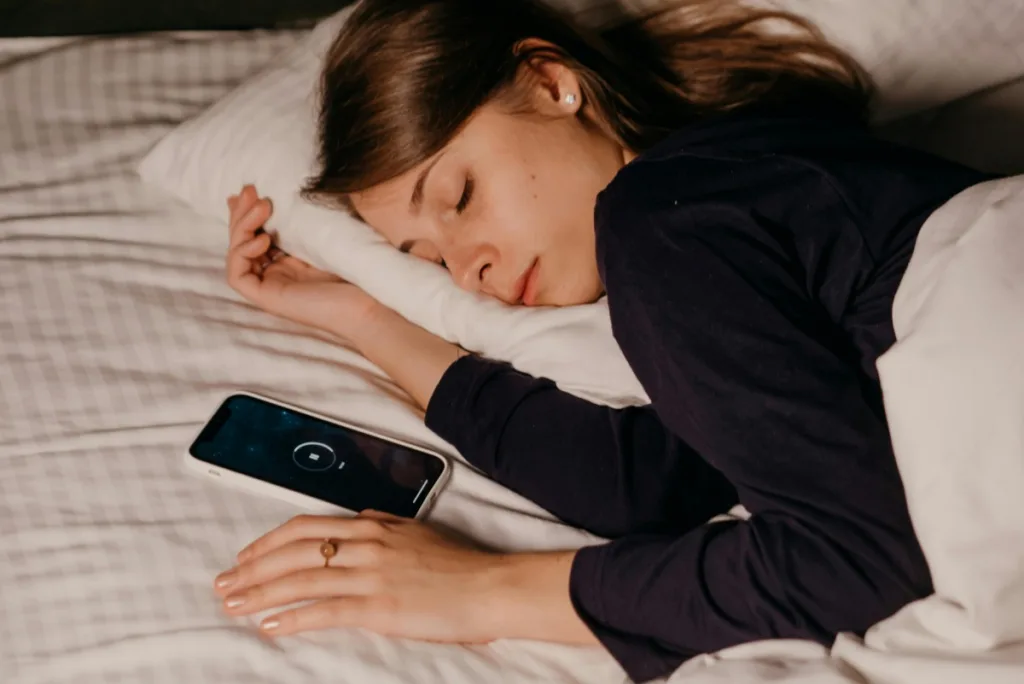
- App-based sleep tracking, which uses phone microphones or motion sensors and offers a rougher estimate
What sleep tracker technology does not do is diagnose sleep disorders or read brain activity.
Clinical sleep studies rely on polysomnography, which tracks brain waves, eye movement, and muscle activity – signals consumer sleep tech simply can’t access.
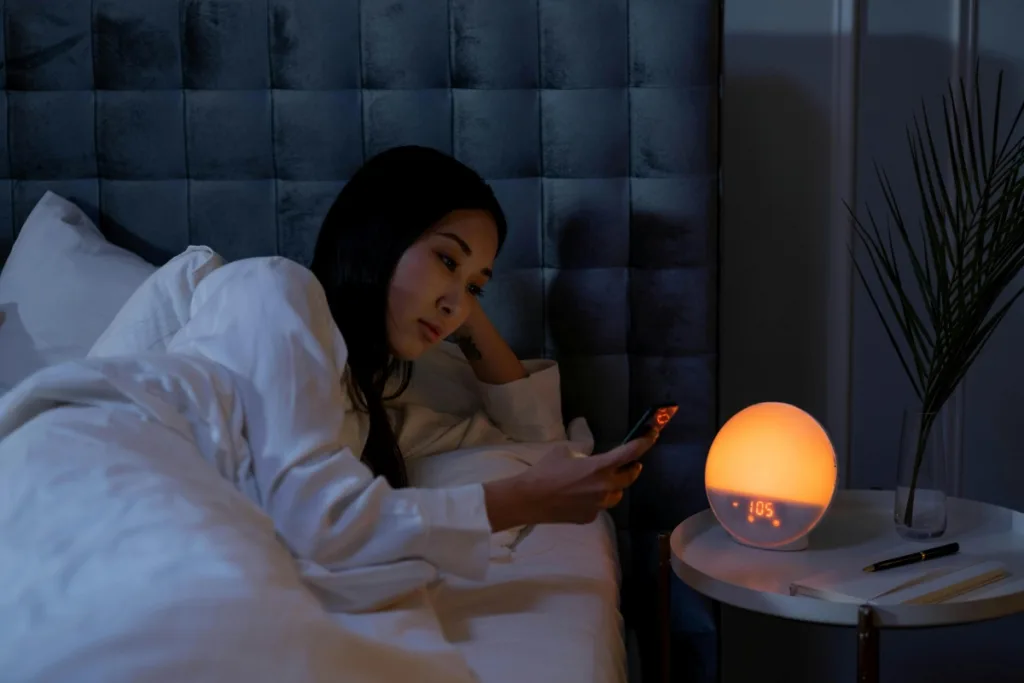
How Sleep Tracking Technology Measures Sleep
Modern sleep tracking technology doesn’t rely on a single signal. It stacks them.
Movement and Actigraphy
Movement is where sleep tracking began, and it’s still the backbone of the system.
This method, called actigraphy, uses accelerometers to track motion so small you never notice it. From the tracker’s point of view, sleep is mostly defined by what doesn’t happen.
Long stretches of stillness usually mean sleep. Frequent shifts suggest lighter rest or brief awakenings. Big movements often mark transitions — rolling over, getting up, or fully waking.
Actigraphy is excellent at answering blunt questions:
- When did you fall asleep?
- When did you wake up?
- How long were you probably asleep?
Where it falls apart is subtlety. A motionless, anxious body can look deeply asleep. A naturally restless sleeper can look half-awake all night. This is why early sleep trackers felt eerily confident and strangely wrong at the same time.
Heart Rate and Heart Rate Variability (HRV)
Heart data is where sleep tracking starts to get interesting. As you drift into sleep, your heart rate slows.
More importantly, heart rate variability begins to rise as the nervous system shifts out of alert mode and into repair.
Sleep tracking technology uses heart signals to add depth to the movement story. They help identify sleep transitions, estimate sleep depth, and capture how stressed or recovered your body actually was overnight.
HRV is especially valuable here. Two nights can look identical on a movement graph and feel completely different the next day. HRV often explains why.
It still isn’t a direct sleep-stage measurement, but it moves the data from “how long you slept” toward “how well your body handled it.”
Breathing and Oxygen Signals
Breathing patterns reveal the background workload of sleep, the part you never consciously experience.
During stable sleep, breathing becomes slower, steadier, and more rhythmic. When sleep is fragmented, breathing often tells on it first.
Many sleep tracking devices monitor respiratory rate, breathing variability, and blood oxygen saturation throughout the night. Some also listen for snoring or breathing disruptions, adding behavioral context to the physiological data.
A single oxygen dip doesn’t mean much. A pattern of irregular breathing over weeks does.
Temperature and Skin Signals
Temperature data is quieter, but it adds timing.
As your body prepares for sleep, core temperature drops slightly while skin temperature at the extremities rises. These shifts help signal that it’s time to power down.
Sleep tracking technology looks for those trends, not exact numbers, using them to estimate sleep onset and flag circadian misalignment.
Skin temperature is easily influenced by your environment, which is why it’s meaningless in isolation. Over time, though, it helps answer a different question: is your body following a rhythm, or fighting one?
Types of Sleep Tracking Devices
Wearable Sleep Trackers
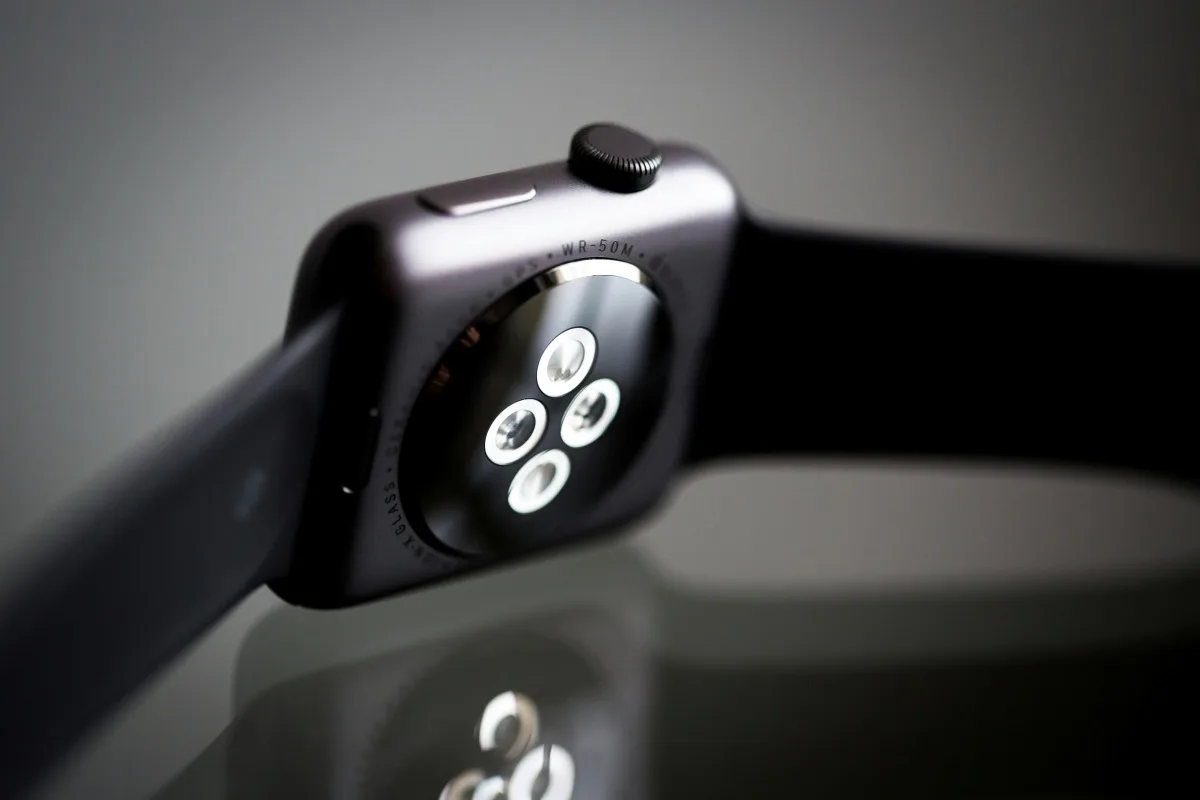
Wearable sleep trackers stay in direct contact with your body all night. Watches, rings, etc. (think Fitbit, Aura Rings, Apple Watches) collect continuous physiological data through the skin, which gives them access to the richest signal mix available in consumer sleep tech.
Because they’re worn, these devices can track:
- Movement at a very fine scale,
- Heart rate and heart rate variability throughout the night,
- And, in many cases, skin temperature and blood oxygen levels.
This proximity is their biggest strength. Wearables are usually the best option for identifying trends over time, especially when it comes to recovery and changes in sleep quality linked to training, illness, or lifestyle shifts.
Their weakness is also obvious. Some people sleep poorly with something attached to them. Others forget to charge or wear the device consistently.
And because wearables sit on the body rather than inside it, they’re still estimating sleep stages rather than measuring them directly.
Non-Wearable Sleep Monitoring Tech
Non-wearable sleep monitoring technology watches sleep from the environment instead of the body. These devices are placed on a bedside table or under a mattress and rely on movement, breathing patterns, and sometimes ballistocardiography – tiny vibrations caused by the heartbeat.
The appeal here is obvious. You don’t have to wear anything. There’s nothing to charge before bed. Once it’s set up, it fades into the background.
Because these devices aren’t in contact with your skin, they typically focus on:
- Gross movement and restlessness,
- Breathing rate and rhythm,
- And sleep–wake timing.
They’re often very good at identifying when you’re in bed and when your sleep is disrupted. Where they struggle is with personalization. Shared beds, pets, and unusual sleeping positions can confuse the signal.
Heart-related metrics are usually less precise than wearables, and long-term recovery insights are more limited.
App-Based Sleep Tracking
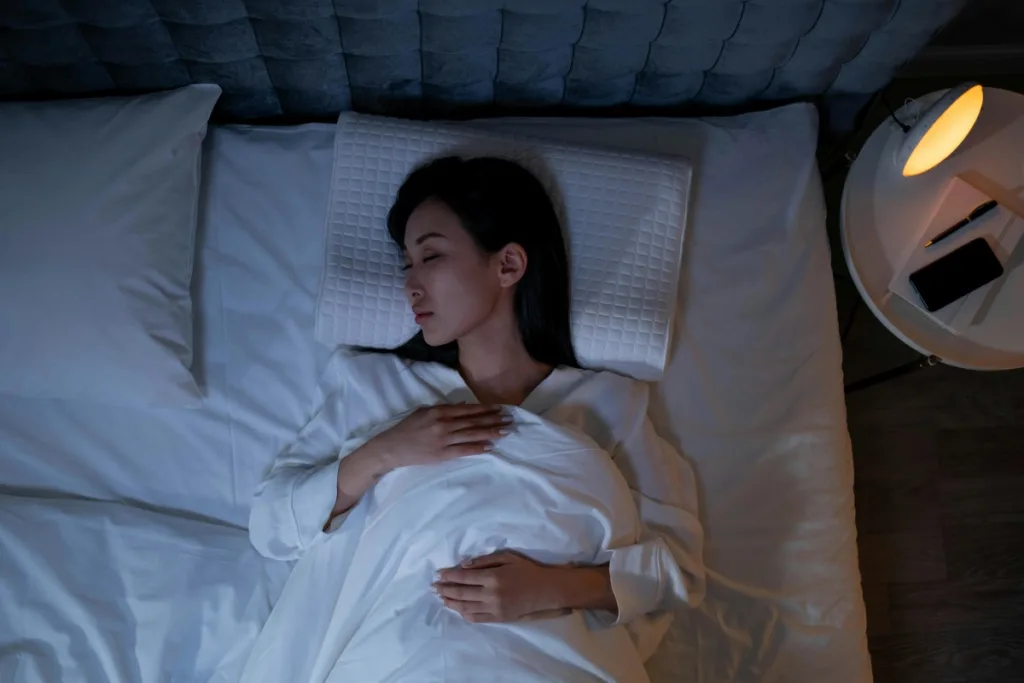
App-based sleep tracking is the most accessible (and the most misunderstood) category.
These systems rely on phone sensors, usually microphones and motion detection, to estimate sleep without any dedicated hardware.
What they’re really tracking is behavior:
- When the phone is still,
- When noise changes,
- When movement patterns suggest rest or wakefulness.
This makes app-based tracking useful for rough timing and habit awareness, especially for people just starting to pay attention to their sleep.
What it can’t do is replace physiological data. Without heart signals, breathing metrics, or temperature trends, app-based sleep tracking has limited insight into sleep quality or recovery. It’s a sketch, not a scan.
How Accurate Is Sleep Monitoring Technology?
Short answer: sleep tracking technology is pretty good at some things, mediocre at others, and occasionally overconfident about the rest.
Longer answer: accuracy depends on what you’re asking the tracker to do.
What Sleep Trackers Are Actually Good At
Across multiple validation studies, consumer sleep trackers tend to perform best at (often 90% accuracy) in estimating sleep duration and sleep timing.
In plain terms, they’re usually reliable at telling when you fell asleep and roughly how long you were asleep.
For everyday use, this is where sleep tracking technology shines. If you want to know whether you’re consistently cutting your sleep short, drifting later and later, or waking up more during stressful periods, trackers are often accurate enough to reveal those trends.
Where Accuracy Starts to Drop
Sleep stages are where things get messy.
Clinical sleep studies use polysomnography, which simultaneously measures brain waves, eye movements, muscle activity, heart signals, and breathing.
Consumer sleep trackers do not measure brain activity. They infer sleep stages indirectly using movement, heart rate, heart rate variability, and sometimes breathing or temperature.
When researchers compare consumer sleep stage data to polysomnography, the pattern is consistent:
- Light sleep is often overestimated
- Deep sleep and REM sleep are less reliably identified
- Individual-night accuracy varies widely, even within the same person
That doesn’t mean the data is useless. It means sleep stage charts should be treated as approximations, not literal recordings.
Can Sleep Tracking Technology Actually Improve Sleep?
Sleep tracking technology doesn’t improve sleep on its own. What it does is change attention. And attention, when it’s pointed in the right direction, can absolutely change behavior.
Awareness Versus Behavior Change
Awareness is the first win most people get from sleep tracking. Patterns that felt vague suddenly become obvious. Bedtimes drift later than expected.
Sleep duration shrinks during stressful weeks. Weekends undo weekday consistency. None of this is shocking, but seeing it quantified makes it harder to ignore.
Where things often stall is the jump from awareness to action. Data alone doesn’t tell you what to do. It just shows you what’s happening.
In that sense, sleep tracking works best as a feedback loop to better sleeping habits, not a scoreboard.
When Sleep Tracking Backfires
Focusing too closely on nightly scores can increase pre-sleep anxiety, especially when the data feels prescriptive or moralized. A “bad” score can bleed into the next day, shaping mood and expectations before anything has actually gone wrong.
This pattern is sometimes called orthosomnia – the pursuit of perfect sleep through excessive monitoring.
Ironically, the more tightly someone tries to control sleep, the harder it often becomes.
Future Forward: The Future of Sleep Tracker Technology
Right now, most sleep tracking systems compensate for uncertainty by stacking signals and increasing resolution.
But the real shift happening in sleep tech is subtler: better interpretation and better context.
From Generic Models to Personal Baselines
One of the biggest limitations of current sleep tracking technology is that it still relies heavily on population averages. What counts as “good” or “poor” sleep is often defined statistically, not personally. That’s starting to change.
Future systems are moving toward individualized baselines — learning how your body behaves under different conditions and judging nights relative to that, rather than against a universal ideal.
Smarter Context, Fewer Numbers
Another major shift is contextual awareness. Sleep doesn’t exist in isolation, and future sleep tech is increasingly designed to account for what happens outside the bedroom.
Instead of treating every bad night as a mystery, newer systems are beginning to factor in training load, stress patterns, travel, illness, menstrual cycles, and work schedules.
As this improves, sleep tracking may include gentle nudges that connect cause and effect without demanding constant attention.
Less Wear, Less Friction
Long-term adoption is a design problem, not a sensor problem. People don’t stop using sleep trackers because the data is bad. They stop because the process gets annoying.
That’s why a lot of future innovation is focused on reducing friction: smaller wearables, passive environmental sensors, and systems that fade into the background entirely. It’s why wearables like fitness rings are gaining such traction.
From Measurement to Guidance
Instead of presenting data and walking away, future systems are increasingly designed to support decision-making.
Less “your sleep score is low” and more “this pattern tends to show up after late light exposure” or “your recovery usually improves when evenings are less compressed.”
Frequently Asked Questions
Are Sleep Trackers Actually Accurate?
Sleep trackers are generally accurate at estimating sleep duration and timing, and less accurate at identifying exact sleep stages. Multiple validation studies comparing consumer sleep trackers to clinical polysomnography show reasonable agreement for total sleep time, but weaker agreement for REM and deep sleep.
Can Sleep Trackers Detect Sleep Disorders?
No. Consumer sleep tracking technology cannot diagnose sleep disorders. Conditions like sleep apnea, narcolepsy, or chronic insomnia require clinical evaluation using tools like polysomnography.
Why Do Different Sleep Trackers Give Different Results?
Because they use different algorithms. Each sleep tracker weighs movement, heart rate, breathing, and other signals in its own way. Even when two devices record the same raw data, they may interpret it differently.
Can Sleep Tracking Make Sleep Worse?
Yes, for some people. Focusing too closely on sleep scores or nightly metrics can increase anxiety and disrupt sleep, especially in people prone to perfectionism or sleep-related stress. This phenomenon is sometimes referred to as orthosomnia.
Do You Need a Sleep Tracker to Improve Sleep?
Not at all. Sleep trackers are optional tools, not requirements. Many people improve their sleep through consistent routines, stress management, light exposure, and lifestyle changes without tracking anything.
Conclusion
Sleep tracker technology is best treated like a curious sidekick, not a sleep deity. It can point out patterns you’d otherwise miss, flag friction you’ve grown used to, and give you a rough map of what’s happening overnight.
The sweet spot is using sleep tracking as information, not instruction. Let it highlight trends. Let it spark questions. Then zoom out and decide what actually matters for your body, your stress levels, and your life.
If you want to understand your sleep without staring at graphs, thefree sleep hygiene test is a quick way to see which habits might be quietly sabotaging your nights.
And if you’re more interested in whether your sleep is actually restorative (not just long), our free restorative sleep assessment helps connect sleep quality to recovery, stress, and how you function during the day.
