


Sleep tracker technology has done something quietly revolutionary. For the first time in human history, millions of people wake up each morning and check a dashboard showing data about their own sleep.
There’s a score. A graph. Maybe some colorful sleep stages. Perhaps a recovery metric staring back like a mildly disappointed teacher.
For many people, that information is genuinely helpful. It reveals patterns you’d never notice otherwise. But for a smaller group of users, something strange happens: the numbers start to feel like a grade.
Suddenly, sleep becomes something to optimize and measure. And that’s where a curious phenomenon called orthosomnia enters the picture.
Sleep researchers began noticing patients who were actually sleeping worse because they were trying so hard to improve their sleep tracker data. The irony is almost poetic.
Understanding why this happens—and how to avoid it—can help you use sleep tracker technology as a helpful guide rather than a nightly report card.
Orthosomnia Sleep Tracker: Table of Contents
What Is Orthosomnia?
Orthosomnia is a term used by sleep researchers to describe an unhealthy obsession with achieving perfect sleep metrics from a sleep tracker.
The word itself combines two roots:
- “ortho”, meaning correct or ideal
- “somnia”, meaning sleep
It literally translates to “perfect sleep.”
People experiencing orthosomnia often become overly focused on sleep scores, sleep stages, or other metrics from sleep tracking apps (Android and IOS) or wearable devices.
Instead of treating sleep data as general guidance, they begin trying to engineer their nights around the numbers.
Sleep is a state that emerges when the brain gradually reduces both physiological and cognitive arousal. Ironically, the harder someone tries to control sleep (by monitoring or worrying about it), the more alert the brain can become, which can delay sleep rather than encourage it.

Can Sleep Trackers Cause Anxiety?
Yes, sleep trackers can contribute to sleep anxiety. The issue isn’t the device itself. Rather, the issue is how the data is interpreted.
When someone wakes up and immediately checks their sleep score, a low number can trigger worry. Thoughts like:
“Why did I only get 45 minutes of deep sleep?”
“Why did my sleep score drop?”
“Did I ruin my sleep by exercising late?”
These questions seem harmless, but over time, they can create a subtle pressure to “perform” during sleep. Sleep doesn’t work well under pressure.
The brain systems responsible for sleep activate when the body feels safe and relaxed. When the mind is busy analyzing sleep data, that relaxation response can be harder to reach.
This is why understanding sleep tracker accuracy matters. Consumer sleep trackers estimate sleep patterns using movement, heart rate, and sometimes breathing signals. They’re excellent for spotting trends, but they don’t measure brain waves the way clinical sleep studies do.
In other words, the numbers are helpful approximations, not absolute truths.
Why Sleep Tracker Data Can Trigger Sleep Anxiety
Sleep trackers are powerful pattern-recognition tools. But the human brain sometimes treats those patterns as judgments rather than information.
Several factors can make sleep data feel more stressful than helpful.
The Perfect Sleep Score Trap
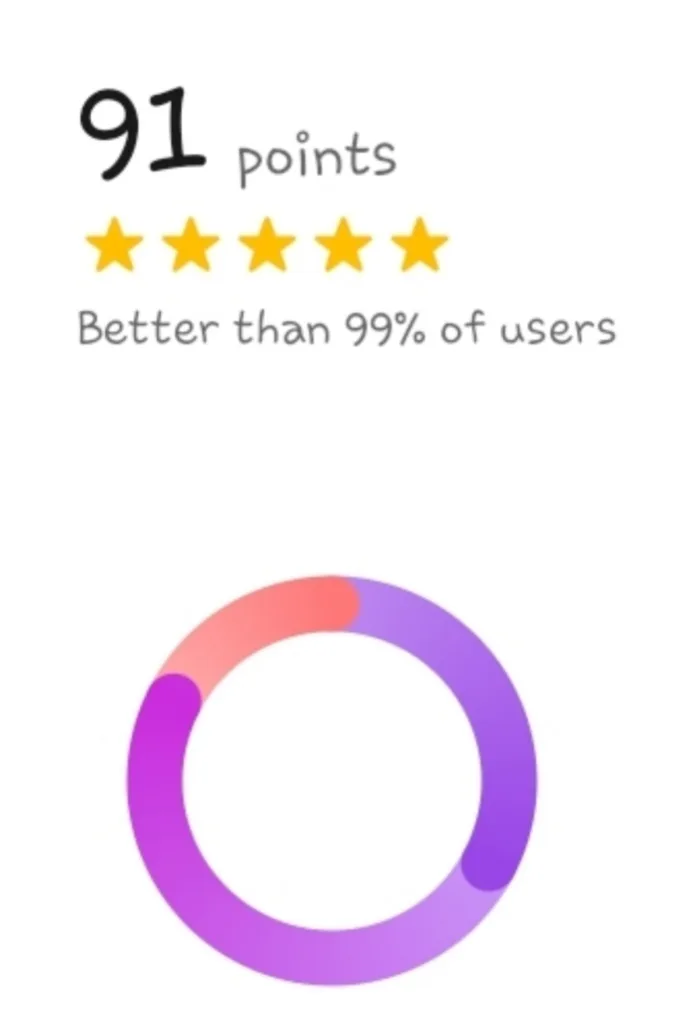
Many sleep tracking apps present sleep data as a single score. Scores are appealing because they simplify complex data. But they also encourage comparison.
A score of 90 feels good. A score of 65 can feel like a failure, even if you slept perfectly well. Sleep is not a competition.
Data Without Context
Sleep trackers estimate sleep stages based on physiological signals. Because of this, nightly changes in deep sleep or REM sleep are normal. People who don’t understand the limits of sleep tracker accuracy may assume every fluctuation represents a real biological problem. Often it doesn’t.
The Pressure to Optimize Sleep
Modern culture loves optimization. We optimize productivity. We optimize nutrition. We optimize workouts.
Sleep, however, operates on different rules. The body’s sleep system prefers consistency and relaxation rather than constant tweaking. Trying to engineer sleep as a performance metric can sometimes create the exact opposite result.
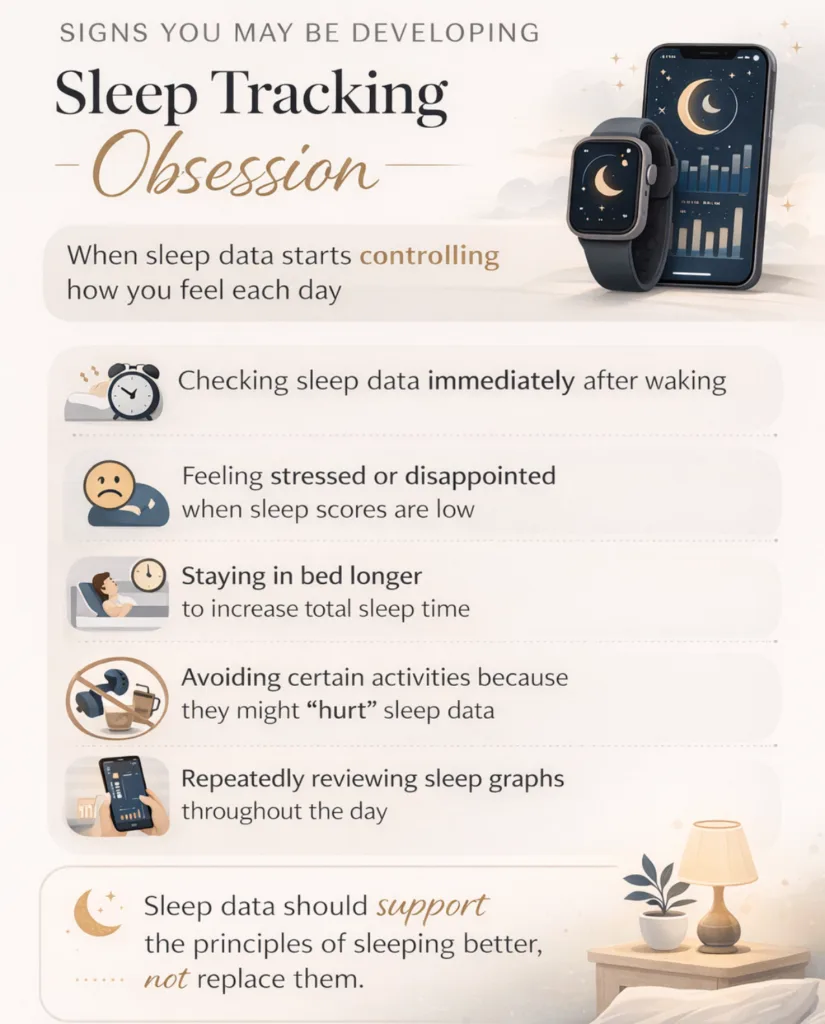
Signs You May Be Developing Sleep Tracking Obsession
Most people use sleep trackers casually. But if data begins to shape how you feel about sleep each day, it may be worth stepping back.
- Common signs of sleep tracking obsession include:
- Checking sleep data immediately after waking every morning.
- Feeling stressed or disappointed when sleep scores are low.
- Staying in bed longer to increase total sleep time.
- Avoiding certain activities because they might “hurt” sleep data.
- Repeatedly reviewing sleep graphs throughout the day.
- These patterns can shift attention away from the real goal: feeling rested and alert.
- Sleep data should support the principles of sleeping better, not replace them.
Are Sleep Trackers Bad for Sleep?
Sleep trackers themselves are not harmful. In fact, they can be incredibly helpful tools. Used properly, they help people:
- Notice irregular sleep schedules
- Identify sleep disruptions
- Track recovery patterns over time
Modern sleep tracker technology has become remarkably sophisticated, especially in wearable devices that measure heart rate variability and overnight heart rate patterns.
However, the usefulness of that data depends on how it’s interpreted.
Understanding the difference between wearables and non-wearables also helps clarify what the data means.
Wearable devices (such as smart watches or rings) collect physiological signals like heart rate and movement directly from the body. Non-wearable devices often sit on a bedside table or under a mattress and estimate sleep patterns using motion or breathing signals.
Both approaches can reveal sleep patterns, but neither provides a perfect measurement of sleep stages. Recognizing those limitations helps prevent data from becoming a source of anxiety.
How Accurate Are Sleep Trackers?
Consumer sleep trackers estimate sleep patterns using signals like movement, heart rate, and breathing. Because they do not measure brain waves directly, sleep tracker accuracy varies depending on the device and the type of data being measured.
In general:
- Sleep duration estimates are usually fairly accurate
- Sleep timing is typically reliable
- Sleep stage estimates are more variable
Understanding the limits of sleep tracker technology helps keep sleep data in perspective. Small nightly fluctuations in sleep stages are common and rarely indicate a real sleep problem.
Both wearables and non-wearables use different methods to estimate sleep. Wearables typically collect physiological signals directly from the body, while non-wearable devices rely on motion or breathing patterns detected from the bed environment.
Because of these differences, sleep metrics can sometimes vary slightly between devices.

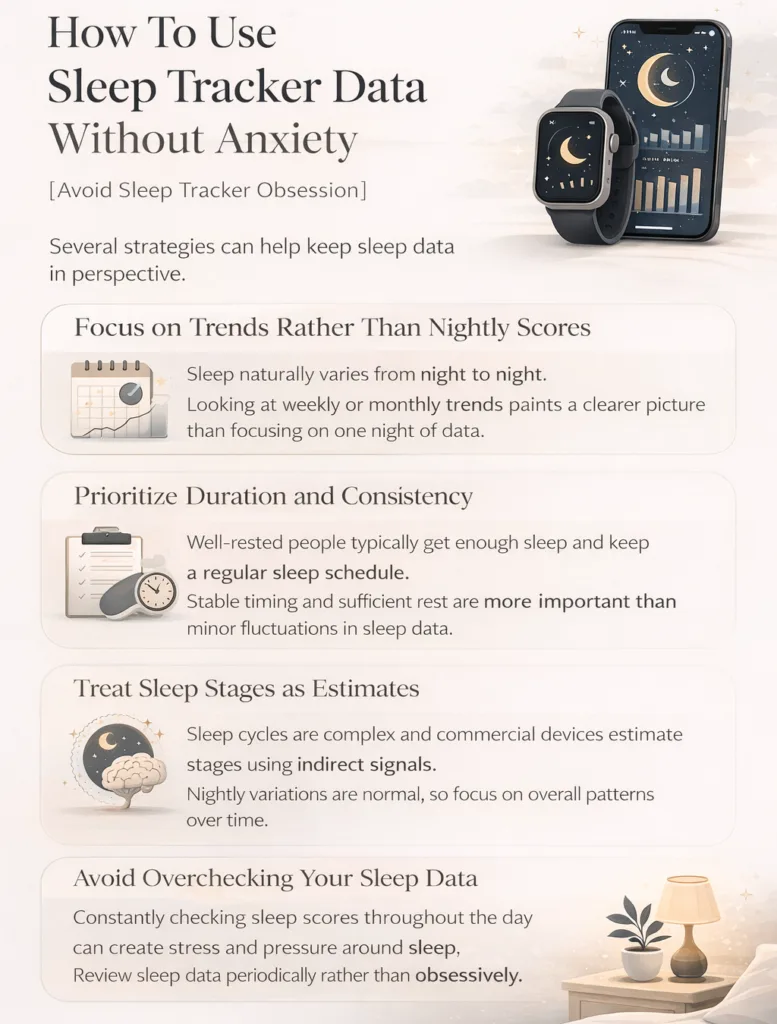
How To Use Sleep Tracker Data Without Anxiety (Avoid Sleep Tracker Obsession)
Several strategies can help keep sleep data in perspective.
Focus on Trends Rather Than Nightly Scores
Sleep naturally varies from night to night. Stress levels, physical activity, meals, illness, and environmental factors like temperature or noise can all influence sleep patterns. Even changes in bedtime or exposure to evening light can subtly shift sleep timing.
Because of this, nightly fluctuations in sleep scores or sleep stages are completely normal. One night with lower sleep quality does not usually indicate a long-term problem.
Looking at weekly or monthly trends provides a much clearer picture than focusing on a single night of data. Over time, patterns begin to emerge. You may notice that sleep improves when you go to bed earlier, declines after late meals, or becomes more fragmented during stressful weeks.
Those broader patterns are where sleep trackers provide the most useful insight.
Prioritize Duration and Consistency
Two of the most reliable signals across devices are sleep duration and sleep schedule consistency. These factors have the strongest relationship with how rested people feel during the day.
Getting enough sleep gives the brain and body time to complete essential overnight processes such as memory consolidation, metabolic recovery, and hormone regulation. At the same time, maintaining regular sleep and wake times helps stabilize circadian rhythms, which control when the body naturally becomes sleepy or alert.
When sleep timing becomes irregular, the circadian system can become misaligned. This is one reason large swings between weekday and weekend sleep schedules sometimes leave people feeling tired even after long nights of sleep.
Focusing on consistent timing and adequate duration tends to produce far greater benefits than trying to optimize smaller details in sleep data.
Treat Sleep Stages as Estimates
Stage data from sleep tracker technology can provide interesting insights, but it’s important to remember that these measurements are estimates.
Consumer sleep trackers infer sleep stages using movement patterns, heart rate signals, and breathing data rather than measuring brain activity directly. In clinical sleep studies, sleep stages are determined through electroencephalography (EEG), which records electrical activity in the brain.
Because consumer devices rely on indirect signals, stage classifications are based on algorithms that detect patterns associated with different sleep states. This approach works reasonably well for identifying general trends, but it cannot perfectly distinguish between every stage of sleep.
Because of this limitation in sleep tracker accuracy, nightly variations in REM or deep sleep percentages are common and usually not meaningful.
Instead of worrying about exact stage numbers, it’s far more helpful to focus on broader patterns across multiple nights.
Avoid Overchecking Your Sleep Data
Checking sleep data occasionally can be helpful, but checking it repeatedly throughout the day can create unnecessary pressure around sleep.
Constant monitoring can shift attention toward numbers rather than how the body actually feels. Over time, this habit can lead people to second-guess their sleep quality even when they feel rested.
A healthier approach is to review sleep data periodically, perhaps once in the morning or at the end of the week, to look for general patterns. This keeps the information useful without turning it into a daily evaluation.
Sleep improves when attention shifts away from constant monitoring and toward habits that naturally support the body’s sleep rhythm. When used this way, sleep trackers function best as awareness tools rather than nightly performance evaluations.
Healthy Ways to Improve Sleep Without Obsessing Over Data
Instead of focusing exclusively on sleep scores from sleep tracking, it is often more productive to focus on behaviors that help the brain and body prepare for sleep each night.
Small adjustments to daily routines can have a surprisingly large impact on sleep quality over time.
Some of the most effective strategies include:
- Maintain a consistent sleep schedule: Going to bed and waking up at roughly the same time each day helps regulate the body’s circadian rhythm. Over time, the brain begins to anticipate sleep at predictable hours, making it easier to fall asleep and wake up naturally.
- Reduce bright light exposure late at night: Artificial light, particularly from phones, tablets, and computers, can delay the release of melatonin, the hormone that signals the body to prepare for sleep. Dimming lights in the evening and limiting screen exposure before bed can help the brain transition toward sleep.
- Limit caffeine in the afternoon and evening: Caffeine can remain active in the body for several hours. Consuming it too late in the day may interfere with the ability to fall asleep or stay asleep during the night.
- Create a comfortable sleep environment: A bedroom that is dark, quiet, and slightly cool tends to promote deeper, more stable sleep. Small environmental adjustments—such as blackout curtains, white noise, or improved mattress comfort—can significantly improve sleep quality.
When used thoughtfully, sleep tracker technology can highlight helpful trends while good habits do the real work of improving sleep.
Orthosomnia Sleep Tracker Frequently Asked Questions
What is orthosomnia?
Orthosomnia is a term used by sleep researchers to describe an unhealthy obsession with achieving perfect sleep data from sleep trackers. People experiencing orthosomnia may become anxious about sleep scores or sleep stages, even when their sleep is normal.
Can sleep trackers make insomnia worse?
In some cases, they can. When people become overly focused on improving sleep metrics, the pressure to achieve perfect sleep can increase anxiety at night. This phenomenon is sometimes called orthosomnia.
Why do sleep trackers sometimes cause anxiety?
Sleep trackers can cause anxiety when users treat sleep data as a judgment rather than a general pattern. Fluctuations in sleep stages or scores are normal, but without understanding sleep tracker accuracy, people may assume those variations reflect a real sleep problem.
Should you stop using a sleep tracker?
Most people do not need to stop using sleep trackers. When interpreted properly, they can help people understand sleep patterns and build habits that help them get better sleep. Problems typically arise only when the data becomes a source of stress.
Conclusion
Sleep trackers were designed to help people understand their sleep patterns, not to turn sleep into a performance test.
When interpreted correctly, sleep tracker technology can reveal helpful patterns in sleep duration, consistency, and recovery. But those insights are most valuable when paired with healthy habits and realistic expectations about sleep tracker accuracy.
If you’d like to take the next step, you can start by evaluating your own sleep habits.
The Soft Engine offers a FREE Sleep Hygiene Test that helps identify behaviors and environmental factors that may be quietly disrupting your sleep.
